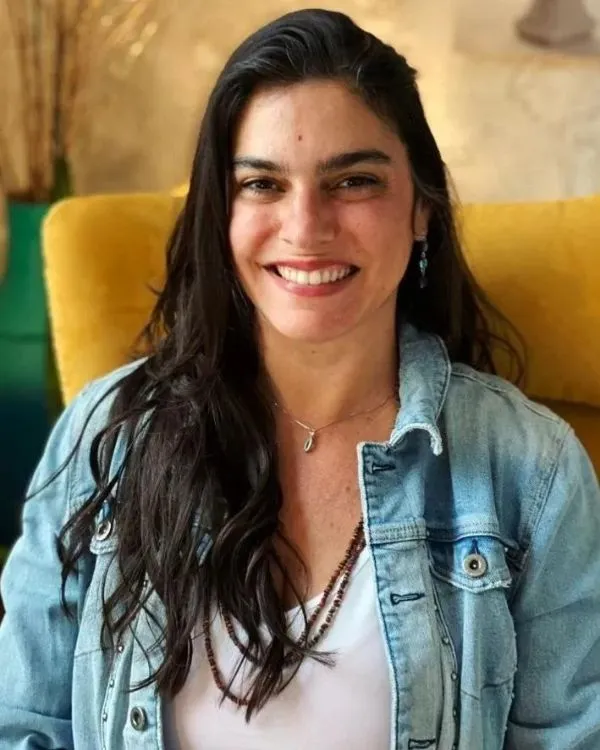
Andressa Taverna
Registered Therapeutic Counsellor
EMOTION FOCUSED COUPLES TRAINED
The attempt to escape from pain is what creates more pain.
Dr. GABOR MATE

Specialties
- Trauma & PTSD
- Depression & Anxiety
- Shame & Guilt
- Grief
- Relationship & Couples
- Attachment & Codependence
- Mind-Body Connection
- Self-Identity & Self-Esteem
- Cultural & Racial Challenges
- Adverse Childhood Experiences
- Inner Child
- Addictions
- LGBTQ+
- Spirituality
Approaches
- Emotion Focused Couples Therapy
- Person-Centered
- Anti-Oppression
- Culturally Sensitive
- Trauma-Informed
- Somatic (Body-Centred)
- Mindfulness-Based
- Existential
- Radical Self-Acceptance
- Feminist
Formal Trainings
- EFCT
- EMDR
Qualifications
- Diploma in Professional Counselling
Credentials and Licensing
- RTC #3036 of ACCT
Languages
- English
- Portuguese
You may feel that there’s something off, yet you can’t pinpoint precisely what. Perhaps you feel disconnected from the world and from your truth.
“Am I doing enough? Am I doing life the right way?”
The trouble is that overwhelming feelings can make it even harder to open up and trust friends, loved ones and even therapists, right when we need connection most.
Being human can get complicated sometimes, and there is nothing wrong with how you feel. What’s more important is you know that you’re tired of feeling like this and deep down, you trust that there is a better way and that you are worthy of that.
Hi, I am Andressa Taverna.
Being a trauma survivor has moulded me and impacted my life in many obvious and also many mysterious ways. Numbing out and dissociating has helped me bear the trauma, but burying it deep and pretending it didn’t exist never really worked.
It was only when I started looking at it and inviting my demons to come forward, to speak up, to scream out their rage, that what I saw behind it was pain. Eventually, I saw that they were not demons after all, but my inner child.
It has taken me lots of therapy, many different medicines, so much pain and many many crashes and falls for me to turn down the numbing, the denial, the self-blaming and the huge shaming, and put all that into my forgiving journey, which can only start with self-forgiving.
When I connected with my inner child and received adequate support, I could then understand and separate who I really was and what was just the effects of the trauma. When I started feeling like my true self, I could also begin dreaming and choosing how I wanted to move forward. Today, I feel honoured to hold space for people that have hurt, too, even if it’s not the same pain (no pain is the same, after all).
As a Registered Wellness and Therapeutic Counsellor with the ACCT, Association of Cooperative Counselling Therapists of Canada, I support clients like yourself towards deep acceptance and the radical inclusion of all the parts of who you are. I offer to help you explore your inner world and to move towards spaciousness, integration and joy.
I work with many people who are struggling with anxiety, depression, childhood trauma/PTSD through the use of trauma-informed, somatic based IFS (Internal Family Systems). I abide by a non-judgmental and compassionate framework, and I can assist you individually or in a couples/relationship setting. I also have a background as a Doula and Life Coach and I draw on these aspects in my clinical work.
If you are ready to step out of the pain, I would be honoured to hold your story and help you to find peace and safety with your truth as a person.
COUNSELLING
Individual & Couples Counselling
Andressa Taverna: Somatic, Trauma-Informed Counselling Shaped by Lived Experience
Andressa Taverna is a Registered Therapeutic Counsellor at Thrive Downtown who helps people move out of numbing, shame and survival mode toward spaciousness, integration and joy. Drawing on somatic Internal Family Systems, Emotion Focused Couples Therapy and a feminist, anti-oppressive lens, Andressa works with individuals and couples. This guide explains how that work unfolds and how to begin.
On this page

Who Andressa Taverna Supports
Andressa’s page opens with a feeling many people recognize: something is off, yet it is hard to say exactly what. You may wonder whether you are doing enough, or doing life the right way. Andressa Taverna lists fourteen specialties, which tend to cluster into a few themes.
Trauma and its effects
- Trauma and PTSD
- Adverse childhood experiences
- Inner child healing
- Mind-body connection
Emotional pain
- Depression and anxiety
- Shame and guilt
- Grief
- Addictions
Relationships and identity
- Relationship and couples concerns
- Attachment and codependence
- Self-identity and self-esteem
- Cultural and racial challenges
- LGBTQ+ experiences
- Spirituality
You do not need to fit neatly into any of these categories. Many people arrive with a mix, or simply with a sense that they are tired of feeling the way they do.
Adverse Childhood Experiences and Their Echoes
Adverse childhood experiences, often called ACEs, are potentially traumatic events that happen before adulthood. The term comes from a large study by the US Centers for Disease Control and Prevention and Kaiser Permanente in the 1990s, which looked at how early adversity relates to health later in life.
Examples of ACEs
- Physical, emotional or sexual abuse
- Physical or emotional neglect
- Growing up with a caregiver who struggled with mental illness or substance use
- Witnessing violence at home
- Parental separation, or a family member being incarcerated
What the research suggests
Research has linked higher numbers of ACEs with greater risk of physical and mental health challenges in adulthood. Just as important, research also suggests that safe, supportive relationships can buffer those effects at any age. ACEs describe what happened to you. They are not a prediction of who you will become.
How this shows up in adult life
Early adversity can echo in hypervigilance, difficulty trusting, people pleasing, a harsh inner critic, or feeling numb when others seem to feel so much. Counselling with Andressa can help you understand these patterns as adaptations that once kept you safe.
Numbing, Dissociation and the Way Back
Andressa shares openly on this page about being a trauma survivor and about how numbing out and dissociating once helped to bear the pain, even though burying it never truly worked. The Gabor Maté quote chosen for the page, “The attempt to escape from pain is what creates more pain”, speaks to the same truth.
What dissociation can feel like
- Zoning out or losing time
- Feeling as if you are watching yourself from outside
- The world seeming foggy, flat or unreal
- Feeling cut off from emotions or physical sensations
- Going on autopilot during stressful moments
Why it happens
Dissociation is a natural protective response when a situation feels overwhelming and escape is not possible. It can be life-saving in the moment. Over time, though, it can also keep you from feeling joy, connection and your own truth.
Coming back gently
Healing does not mean forcing yourself to feel everything at once. It means building enough safety that the protective numbness can ease a little at a time. Grounding in the senses, noticing the breath, and feeling your feet on the floor are simple ways many people begin.
A grounding practice to try
The 5, 4, 3, 2, 1 exercise is a widely used way to return to the present when you feel far away:
- Name five things you can see
- Notice four things you can feel, such as your clothes or the chair beneath you
- Listen for three sounds
- Find two things you can smell
- Notice one thing you can taste
Somatic IFS with Andressa Taverna
Andressa Taverna describes using trauma-informed, somatic based IFS with clients experiencing anxiety, depression and childhood trauma. This blends Internal Family Systems with close attention to the body.
Parts live in the body too
In somatic IFS, a part might first appear as tightness in the chest, a lump in the throat or heaviness in the limbs. Rather than analyzing it from a distance, you are invited to notice where it lives, what it feels like, and what it might want you to know.
From demons to inner child
Andressa’s page describes inviting inner “demons” to speak, only to find pain behind the rage and, eventually, a hurting inner child. IFS shares this view: even the parts that seem most destructive are usually protecting something tender.
What this work can offer
- Separating who you truly are from the effects of trauma
- Befriending protective parts, including those that numb or dissociate
- Offering younger parts the care they did not receive
- Feeling more at home in your body
- Room to begin dreaming and choosing how you want to move forward
The IFS Institute offers further reading on the model.


Shame, Guilt and Self-Forgiveness
Shame and guilt are listed among Andressa’s specialties, and self-forgiveness is at the heart of the story Andressa shares. A helpful distinction many counsellors use: guilt says “I did something bad”, while shame says “I am bad”.
Why the difference matters
Guilt can motivate repair and growth. Shame tends to push us into hiding, blaming or numbing, which often deepens the pain. Recognizing shame when it shows up is a first step toward loosening its grip.
Radical self-acceptance
Radical self-acceptance means meeting all of yourself, including the parts you have judged harshly, with openness rather than rejection. It is not the same as giving up on change. Many people find that acceptance is actually what makes change possible, because energy once spent fighting yourself becomes available for healing.
Steps toward self-forgiveness
- Acknowledge what happened and how it affected you and others.
- Understand the context, including what you knew and what you were coping with at the time.
- Make amends where appropriate and possible.
- Offer yourself the compassion you would offer someone you love.
- Choose how you want to act from here.
Grief in Its Many Forms
Grief is one of Andressa’s listed specialties, and it takes many shapes. Alongside the death of a loved one, people grieve relationships, health, homelands, identities and the childhood they needed but did not have. Grief for what never happened can be especially hard to name.
- Waves of sadness, anger or longing that come without warning
- Guilt or regret about what was said or left unsaid
- Feeling disconnected from people who have not experienced a similar loss
- Physical exhaustion, changes in sleep or appetite
In counselling, grief is given room to move rather than being rushed or fixed.
The Approaches Andressa Taverna Uses
Alongside somatic IFS, Andressa Taverna lists the following approaches and trainings.
- Emotion Focused Couples Therapy: helps partners recognize their negative cycle and build secure connection. Andressa is formally trained in EFCT; the ICEEFT has more background.
- EMDR: listed among Andressa’s formal trainings; it uses bilateral stimulation to help reprocess distressing memories. See Thrive’s EMDR therapy page.
- Person-centred therapy: a non-judgmental, compassionate relationship where you set the direction.
- Anti-oppression and culturally sensitive practice: your culture, race and identity are recognized, and the impact of systemic harm is taken seriously.
- Feminist therapy: attends to power, gender and social context, and values your own expertise about your life.
- Existential therapy: explores meaning, freedom, choice and what it means to live authentically.
- Mindfulness-based approaches: build present-moment awareness with kindness.
- Somatic, body-centred work: uses sensation, breath and movement as pathways to regulation and insight.
- Trauma-informed care: safety, choice and pacing guide every step.
A Doula and Life Coaching Background
Andressa’s page mentions a background as a doula and life coach, both of which inform the clinical work. A doula offers continuous, grounded presence through one of life’s most intense transitions. Life coaching looks toward the future, helping people clarify what they want and take steps toward it.
In counselling, these roles can translate into steady companionship through difficult passages, alongside encouragement to dream and choose how you want to move forward once you feel safe enough to do so.
Couples Counselling with Andressa
Andressa works with couples and relationships as well as individuals. Attachment wounds and codependence often show up most clearly with the people closest to us. Using EFCT, sessions can help partners understand what each is really longing for underneath conflict or distance, and respond to each other with more safety and care. Thrive’s couples counselling page explains more.
Starting Counselling with Andressa Taverna at Thrive
Andressa’s page notes that overwhelming feelings can make it harder to trust anyone, even a therapist, right when connection matters most. Thrive keeps the first steps simple and low pressure.
- Free 15 minute consult: book through the new client appointment page and see how it feels to talk.
- Choose Andressa or be matched: ask for Andressa by name, or share what you need through the contact form. You can also browse Thrive’s counsellors.
- First session: you share what brings you in, at your own pace and in your own words.
- A collaborative plan: together you decide on focus and approaches, revisiting them as you grow.
- In person or online: meet at 470 Granville St. in downtown Vancouver or by secure video.
Languages
Andressa’s page lists English and Portuguese, so you can ask about working in the language that feels most natural to you.
The Thrive Formula
Regulate builds safety in the body through grounding and somatic work. Reveal uses IFS and inner child work to understand how you adapted to pain. Reclaim supports you in living from your true self, with more choice, spaciousness and joy.
Fees and coverage
Current rates are shown when booking or on the contact page. Extended health coverage varies, so check your plan regarding Registered Therapeutic Counsellors. Thrive also offers low-cost counselling with supervised interns.
Frequently Asked Questions About Andressa Taverna
What are Andressa’s credentials?
Andressa Taverna is a Registered Therapeutic Counsellor with the Association of Cooperative Counselling Therapists of Canada (RTC #3036 of ACCT), holds a Diploma in Professional Counselling, and has formal training in EFCT and EMDR.
Do I have to talk about my trauma in detail?
No. Somatic and parts-based work can often help without retelling every detail. You decide what to share and when.
Is Andressa LGBTQ+ affirming?
Yes. LGBTQ+ experiences are one of Andressa’s listed specialties, and Thrive is an affirming centre. QMUNITY is a helpful BC community resource.
Can Andressa help with addiction?
Addictions are among the listed specialties. Thrive also has dedicated addiction counselling information.
Can I have sessions in Portuguese?
Andressa’s page lists English and Portuguese. Mention your language preference when you book or during the free consult.
Can spirituality be part of sessions?
If it matters to you, yes. Spirituality is a listed specialty, and it is always guided by your own beliefs.
What if I am in crisis?
Counselling is not an emergency service. If you are in crisis, call or text 988, or call 911 in an emergency. Support is also available at 988.ca.
Step Out of the Pain with Andressa Taverna
There is nothing wrong with how you feel, and you are worthy of a better way. If you are ready, Andressa would be honoured to hold your story. Book a free 15 minute consult through the Thrive contact page or call 604-227-0297 to connect with Andressa Taverna.