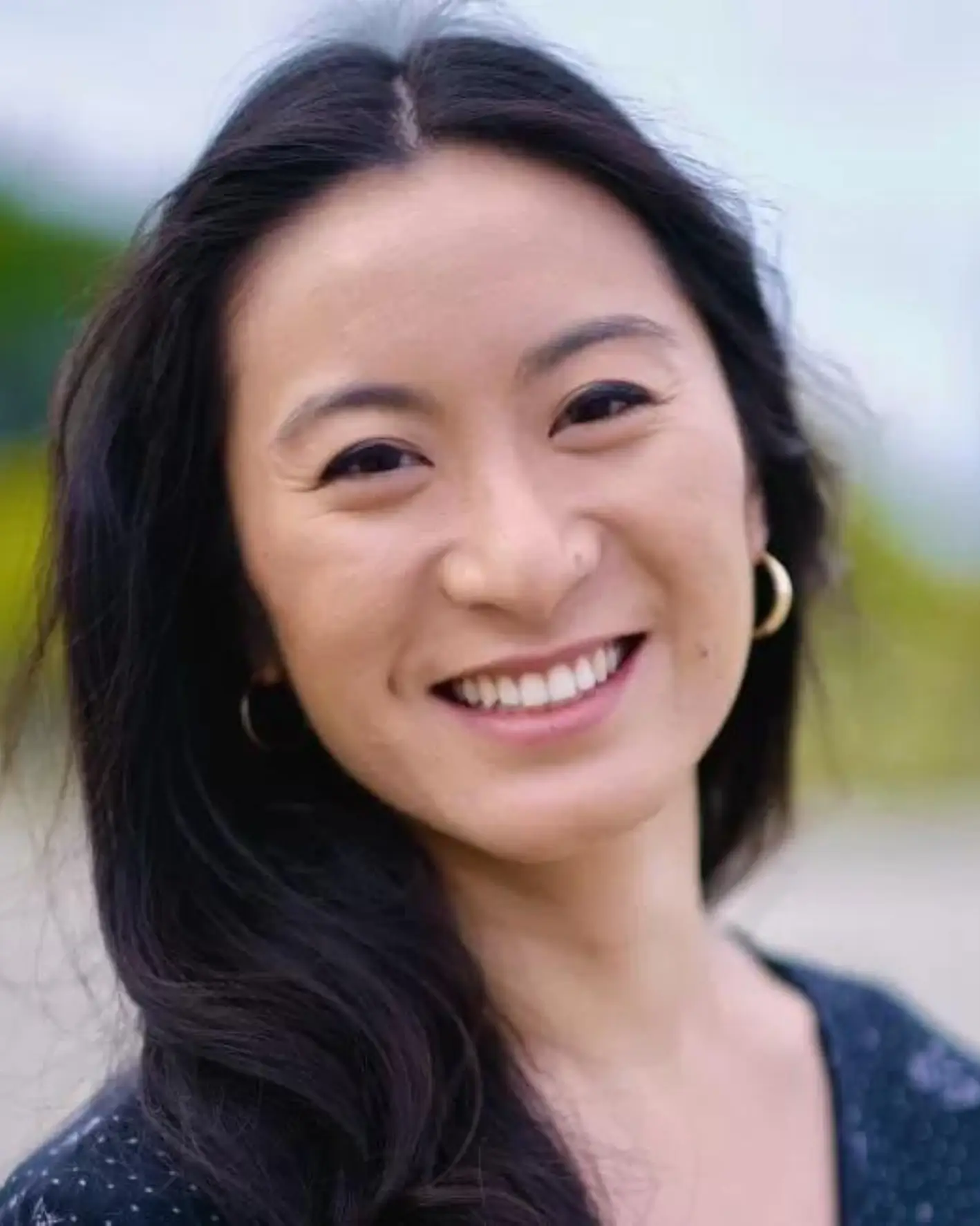
Laura Lu
Masters of Science, Clinical Psychology
Registered Clinical Counsellor
EMDR Trained Practitioner
Emotionally Focused Couples Therapy Trained
Our feelings are our most genuine paths to knowledge.
AUDRE LORDE

Specialties
- Childhood, family & intergenerational trauma resolution
- Personal growth, meaning & fulfillment
- Attachment & relational issues
- Couples & relationship issues
- Racial & cultural identity challenges
- Self identity & self esteem
- Depression & experiences of disconnection or shame
- Psychedelic integration
- Trauma & PTSD
- Life transitions & changes
- Anxiety
- Mind-body connection
Approaches
- Trauma-informed practices
- Mindfulness-based therapies
- Person-centered approaches
- Internal family systems therapy
- Eye movement desensitization reprocessing (EMDR)
- Somatic (body-based) practices
- Psychodynamic therapy
- Relational therapy
- Attachment-based therapy
- Narrative therapy
- Existential therapies
- Emotionally focused therapy for individuals and couples
- Emotion focused family therapy
- Psychedelic integration therapy
- Dialectical behaviour therapy
- Inner child work
- Self-compassion practices
- Culturally sensitive, anti-oppressive practices
Formal Trainings
- Eye Movement Desensitization Reprocessing (EMDR)
- Emotionally Focused Family Therapy (EFFT) Level 1
- Emotionally Focused Individual Therapy (EFIT)
- Dialectical Behaviour Therapy (DBT)
- Emotionally Focused Couples Therapy (EFT/EFCT)
- Foundations to Contemporary Narrative Therapy
Qualifications
- MSc in Clinical Psychology (San Francisco State University)
- BA in Psychology (University of British Columbia - UBC)
Credentials and Licensing
- RCC #19901 BCACC
Languages
- English
For any inquiries, please contact laura@thrivedowntown.com
Being human is hard. Sometimes, the waves of the human experience feel like they’re engulfing us, and we feel swallowed up by grief, terror, shame, sorrow, or confusion. Other times, we may feel so disconnected and numb from ourselves, others, and the world we live in, that we wonder whether a meaningful life is possible.
Perhaps there are parts of your mind and heart that are fighting with each other, and you’re living day-to-day wrestling with constant inner turmoil. Or perhaps, you are simply too exhausted to fight any longer. Or maybe you are tired of repeating the same old patterns and finding yourself in the same place you once were: frustrated and perplexed as to how you can break out of a cycle that is no longer serving you. You feel that it is time for a change, but you’re not sure how to proceed.
Taking the first (or fiftieth!) step towards healing may feel difficult and scary. You may wonder how anyone could possibly understand the despair, chaos, or pain in your mind and soul. You may be confused and overwhelmed about where to start. I’m here to tell you: what you’re feeling is normal. You don’t have to know how to take the next step, simply finding yourself on this page demonstrates a glimmer of courage and hope that you’re ready for an important step in your healing journey.
In our sessions together, you can show up exactly how you are: afraid, heartbroken, confused, wounded, enraged, curious, lonely, anxious, hopeful, excited, uncertain… It is my privilege to meet you wherever you are in the moment with compassion, safety, trust, and understanding, while acting as a mirror so you can look deeper within yourself, and step out of your comfort zone, when you feel ready.
Everyone has a story that shapes the person they become. Together, we will explore the parts of your story that may have once felt too heavy or difficult to look at. Rest assured that this time, you won’t be alone. My aim is to walk alongside you in exploring and redefining your story, so you can move forward in your life with greater ease, connectedness, grounding, and clarity.
My purpose is not to have all the answers for you. My role is to serve as a guide so that you may discover the intuitive wisdom and capacity for healing you have within, all while gently helping you realize that you were never broken: that you are deeply whole, as you are.
With my practice grounded in anti-oppressive, culturally sensitive, and social justice principles, I view therapy as an individual pursuit of collective liberation. Our work together will be deeply relational and my understanding of you will be shaped by who you are within your contexts: your identities, your past and present relationships, your family history, the cultures that you have been touched by, and larger societal systems. By first understanding who you are, we may then start to uncover your most authentic and connected self, who you were truly meant to be.
COUNSELLING
Individual & Couples Counselling
Laura Lu: Relational, Culturally Sensitive Counselling
Laura Lu is a Registered Clinical Counsellor at Thrive Downtown who understands you within the full context of your life: your identities, relationships, family history and the cultures and systems that have shaped you. Trained in EMDR, emotionally focused therapy and narrative therapy, Laura helps people heal old wounds, make sense of their stories and reconnect with a sense of wholeness. This guide explores how Laura works and how to begin.
On this page
Your Story in Context: Laura Lu’s Anti-Oppressive Lens
Laura’s page describes therapy as “an individual pursuit of collective liberation”. In practice, this means your struggles are not viewed in isolation. Anxiety, shame or disconnection are understood alongside the pressures and messages you have absorbed from family, culture and society.
What culturally sensitive, anti-oppressive practice can mean for you
- Your cultural background, language, faith and traditions are treated as meaningful, not as side notes.
- Experiences of racism, discrimination or exclusion are acknowledged as real sources of stress and harm.
- Power in the therapy room is shared, and you are the expert on your own life.
- Healing is not about fitting into a narrow definition of “normal”.
- Your counsellor stays curious about their own assumptions and blind spots.
Racial and cultural identity challenges
Many people carry the experience of living between cultures: honouring family expectations while forging their own path, feeling “too much” of one identity in one space and “not enough” in another, or navigating subtle and overt racism. Laura lists racial and cultural identity challenges as a specialty and offers space to explore these tensions without having to explain or defend your experience.
Self identity and self esteem
When the messages around you have been critical or narrow, it can be hard to know who you really are. Laura’s page speaks of uncovering your “most authentic and connected self”, and counselling can support you in separating your own values from the ones you were handed.
Intergenerational Trauma and Family Patterns
Childhood, family and intergenerational trauma resolution is the first specialty on Laura Lu’s page. Intergenerational trauma describes how the effects of hardship, such as war, migration, poverty, colonization, abuse or loss, can ripple through families long after the original events.
How it can show up
- Unspoken family rules, such as “we do not talk about feelings”
- Strong reactions that seem bigger than the present situation
- Patterns of anxiety, perfectionism or emotional distance that repeat across generations
- Difficulty trusting others or asking for help
- A sense of carrying grief or fear that does not seem to be yours alone
How therapy can help
Healing intergenerational patterns is not about blaming parents or grandparents, who often did their best with what they had. It is about understanding what was passed down, keeping what nourishes you, and gently setting down what no longer serves you. Laura may draw on attachment-based, IFS, EMDR and narrative approaches for this work.
Narrative Therapy: Re-authoring Your Story
Laura’s page notes that “everyone has a story that shapes the person they become”. Narrative therapy, developed by Michael White and David Epston, takes that idea seriously. Laura has completed Foundations to Contemporary Narrative Therapy training.
Key ideas in narrative therapy
- Externalizing: the person is not the problem; the problem is the problem. Depression or shame becomes something you have a relationship with, rather than who you are.
- Dominant stories: the narratives, often shaped by family and culture, that define how you see yourself.
- Unique outcomes: moments that do not fit the problem story, such as times you stood up for yourself or felt at peace.
- Re-authoring: building a richer, preferred story that reflects your values, strengths and hopes.
Many people find this approach freeing, because it creates distance from the problem and restores a sense of choice.
The Approaches Laura Lu Integrates
Laura Lu draws on a wide range of approaches. Rather than applying all of them at once, Laura chooses what fits your needs and preferences. Here they are grouped by focus.
Emotion focused therapies
Emotionally focused therapy for individuals (EFIT), couples (EFT or EFCT) and families (EFFT) views emotions as guides to our deepest needs. The Audre Lorde quote on Laura’s page, “Our feelings are our most genuine paths to knowledge”, captures the spirit of these approaches. Laura has formal training in all three, including EFFT Level 1.
Trauma and body-based approaches
- EMDR: uses bilateral stimulation to help the brain reprocess distressing memories, often used for trauma and PTSD. The EMDR International Association has more detail.
- Somatic practices: bring attention to sensations, breath and posture, supporting the mind-body connection Laura lists as a specialty.
- Trauma-informed practices: safety, choice and pacing come first in every session.
- Dialectical behaviour therapy (DBT): practical skills for managing intense emotions, tolerating distress and communicating needs.
Parts, inner child and self-compassion
- Internal Family Systems: helpful when parts of your mind and heart seem to be fighting with each other.
- Inner child work: tending to younger parts that did not receive the care they needed.
- Self-compassion and mindfulness: meeting yourself with kindness and present-moment awareness.
Depth, meaning and relationship
- Psychodynamic therapy: explores how past experiences and unconscious patterns shape the present.
- Relational and attachment-based therapy: uses the therapy relationship itself as a place to experience safety and new ways of connecting.
- Existential therapies: engage with questions of meaning, freedom, isolation and mortality.
- Person-centred approaches: empathy, acceptance and genuineness form the foundation.
Psychedelic integration therapy
Integration sessions help you make sense of a psychedelic experience and weave its insights into daily life. Laura does not supply or administer substances. The legal status of psychedelics in Canada is evolving, so follow Canadian law and medical guidance. Learn more about psychedelic support at Thrive.


Couples and Relationship Work
Couples and relationship issues, as well as attachment and relational issues, are among Laura’s specialties. Using Emotionally Focused Couples Therapy, Laura helps partners understand the cycle that keeps them stuck and reach for each other in safer, more responsive ways. Cultural differences, family expectations and past hurts are all welcome parts of the conversation. The ICEEFT website offers background on EFT, and Thrive’s couples counselling page explains more.
Anxiety, Depression and Disconnection
Sometimes the waves of life feel overwhelming, and sometimes they leave you feeling numb and far away from yourself and others. Both experiences are human responses to pain, and both deserve care rather than judgment.
What this can feel like
- Constant inner turmoil, as if parts of you are at war
- Exhaustion so deep that fighting any longer feels impossible
- Numbness, flatness or a sense of watching life from the outside
- Shame that makes it hard to reach out
- Worry that loops no matter how much you try to reason with it
Ways counselling can help
Depending on what you need, sessions might focus on settling the body through somatic practices, understanding the protective role of numbness or anxiety through parts work, or processing painful memories with EMDR. Over time, many people find they can feel more without being overwhelmed, and reconnect with the people and activities that matter to them.
Meaning, Growth and Life Transitions
Not everyone comes to counselling in crisis. Personal growth, meaning and fulfillment, along with life transitions and changes, are also part of Laura’s work. Existential and narrative approaches can be especially helpful when you are asking questions like these:
- What gives my life meaning now that things have changed?
- Who am I beyond my roles at work or in my family?
- How do I live in a way that honours both my culture and my own values?
- What story do I want to be telling about this chapter of my life?
Beginning Counselling with Laura Lu at Thrive
Laura’s page reminds you that you do not have to know how to take the next step. Thrive’s process is designed to make that step as gentle as possible.
- A free 15 minute consult lets you ask questions and see how it feels to connect. Book through the new client appointment page.
- Choose Laura or be matched. Request Laura by name, or share what you are looking for on the contact form. You can also explore all Thrive counsellors.
- Your first session is a chance to share what brings you in, at whatever pace feels right.
- A collaborative plan takes shape around your goals, identities and context.
- In person or online: meet at 470 Granville St. in downtown Vancouver or connect by secure video.
The Thrive Formula and Laura’s approach
Regulate focuses on safety and settling the nervous system, supported by somatic and DBT skills. Reveal explores how you adapted to stress and trauma through EMDR, IFS, emotion focused and narrative work. Reclaim helps you live from your most authentic self, with clearer needs and boundaries.
Fees and coverage
Current rates are shown when booking or on the contact page. Many extended health plans reimburse counselling with a Registered Clinical Counsellor; check your plan for details. Laura is registered with the BC Association of Clinical Counsellors.
Frequently Asked Questions About Laura Lu
What are Laura’s qualifications?
Laura Lu holds an MSc in Clinical Psychology from San Francisco State University and a BA in Psychology from UBC, and is a Registered Clinical Counsellor (RCC #19901, BCACC).
Do I need to talk about my culture or identity?
Only if you want to. Laura’s approach makes room for identity and culture, but you decide what feels relevant and when.
Does Laura work with trauma and PTSD?
Yes. Trauma and PTSD, along with childhood and intergenerational trauma, are listed specialties. Laura is EMDR trained and uses trauma-informed practices. See Thrive’s EMDR therapy page for more.
Can Laura see couples?
Yes. Laura offers individual and couples counselling and is trained in Emotionally Focused Couples Therapy.
How long does this kind of therapy take?
There is no fixed timeline. Some people come for a focused period around a specific concern, while deeper trauma or intergenerational work often unfolds over a longer stretch. You can check in about pace and direction at any point, and the plan can change as you do.
What if I feel too exhausted to start?
That is understandable. You do not need to arrive with energy or a plan. Simply reaching out is a meaningful step, and sessions can begin wherever you are.
Can I contact Laura with a question first?
Yes. Laura’s page lists laura@thrivedowntown.com for inquiries. You can also call Thrive at 604-227-0297 or use the contact form.
What if I am in crisis?
Counselling is not an emergency service. If you are in crisis, call or text 988, or call 911 in an emergency. You can also find support at 988.ca.
Take Your Next Step with Laura Lu
You were never broken, and you do not have to walk through the heavy parts of your story alone. When you feel ready, book a free 15 minute consult through the Thrive contact page or call 604-227-0297 to ask about working with Laura Lu.