
Online Counselling across British Columbia
You do not have to live in Vancouver to work with our team. Our online counselling reaches clients across British Columbia, so caring, skilled support is available wherever you are in the province.
Thrive’s online counselling BC service connects you with a counsellor by secure video, so where you live no longer limits who you can work with. Further down this page you will find a full guide to getting started, choosing a counsellor, costs and supports close to home.
Why People Come to Us
From Victoria and Nanaimo to Kelowna, Kamloops, Prince George, and the many smaller communities in between, access to a therapist who truly fits can be limited close to home. Our secure online sessions close that gap. You get the same experienced team and the same evidence-based approaches such as EMDR, Emotion-Focused Therapy, Internal Family Systems, and CBT, delivered privately over video. We help with anxiety, depression, trauma, relationships, neurodiversity, and life direction. Whether you are in a busy city or a rural town, you can begin this week, on your schedule, from a space that feels safe to you.
Get Started
Call 604-227-0297 or book a free consult and we will match you with a therapist who fits.
Serving Communities Across BC
Victoria, Nanaimo, Kelowna, Kamloops, Prince George, Abbotsford, Chilliwack, Squamish, Whistler, and rural communities province-wide.
Related Pages
Individual Counselling. Browse Our Team. Online Counselling in Vancouver.
Online Counselling BC: Support That Reaches You Wherever You Live
This online counselling BC guide is for anyone in the province who wants skilled, caring support without being limited by geography, whether you live in Fort St. John, Tofino, Nelson or a few blocks from our downtown Vancouver office. Below you will find how video sessions work across British Columbia, what people in different regions often bring to therapy, how to choose a counsellor, what to know about fees and benefits, and which local supports are worth keeping close.
On this page
Thrive Downtown Counselling Centre has walked alongside clients since 2013. Our work rests on a simple idea: you make sense, you are not broken, and connection heals. That idea travels well, whether it reaches you in a room on Granville Street or through a laptop at your kitchen table.
Why Distance Should Not Decide Your Care
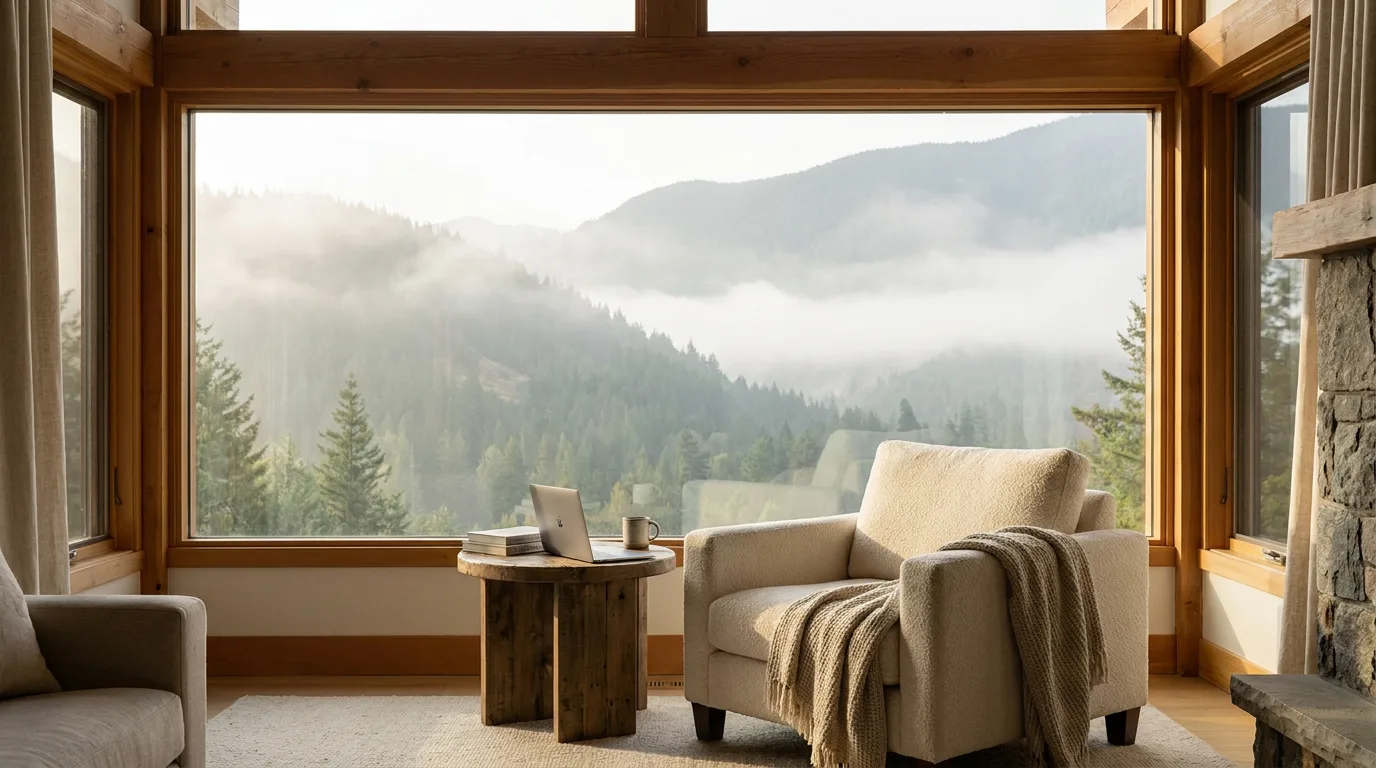
British Columbia is a vast province, and counselling options look very different from one region to the next. In smaller communities, local choices may be limited to a handful of practitioners, waitlists can be long, and specialized approaches such as EMDR or Internal Family Systems may not be offered nearby at all.
Video sessions change that equation. Here are a few reasons people across the province choose to work with us online:
- More choice. You can pick a counsellor for their approach and personality rather than their proximity.
- Privacy in small towns. When everyone knows everyone, working with someone outside your community can feel safer.
- No long drives. Skip the highway, the mountain pass in winter or the ferry lineup.
- Specialized support. Reach counsellors who focus on trauma, neurodivergence, couples, addictions, identity or high stress occupations.
- Continuity. If you move within British Columbia, you can often keep working with the same counsellor.
How Online Counselling BC Clients Get Started With Thrive
Starting is simpler than many people expect. Here is the path from first contact to your first session.
- Free 15 minute consult. Book online or call 604-227-0297. Share what is going on and ask how we might help.
- Matching or choosing. Tell us about your needs through our contact form and we will suggest a counsellor, or browse our team and choose someone yourself.
- A secure video link. Sessions take place over Zoom, which works on most laptops, tablets and phones.
- Your first session. You and your counsellor get to know each other, talk through what brings you in and begin sketching what you want to change.
- A shared plan. Over the first few meetings you shape goals and pacing together, and you can revisit them anytime.
If you visit Vancouver for work, family or medical appointments, you can also book time in one of our downtown rooms at 470 Granville Street, steps from Granville SkyTrain Station. Many clients mix both formats.
The Thrive Formula, delivered by video
Whatever brings you in, our counsellors tend to work through three overlapping stages.
- Regulate. First comes steadiness: settling the nervous system, stepping out of fight, flight or collapse, and building resources you can lean on between sessions.
- Reveal. Next you look, with care, at how you adapted to stress and hard experiences, using approaches such as EMDR, Internal Family Systems, Emotion-Focused Therapy or CBT.
- Reclaim. Then insight turns into practical change in your needs, boundaries and choices, so you can act from who you are.
The stages overlap and loop back, and your counsellor adjusts the pace to you.
Life Across British Columbia: What People Bring to Counselling
Every region of British Columbia has its own rhythm, and that rhythm shapes the stresses people carry. Everyone is different, yet a few themes come up often.
Rural and small-town life
Close-knit communities across British Columbia offer real strengths: neighbours who show up, a sense of belonging, room to breathe. They can also bring isolation, limited services and a feeling of being watched. Many people value a counsellor who sits outside their social circle yet understands small-town dynamics.
Island and coastal communities
On Vancouver Island, the Sunshine Coast, Haida Gwaii and the Gulf Islands, ferries, weather and distance shape daily life, and a mainland appointment can take most of a day. Through our online counselling BC service, coastal residents can join from home instead, keeping sessions consistent even when sailings are delayed or cancelled.
Northern and interior communities
From the Cariboo to the Peace region and the Kootenays, long winters, big distances and fewer local specialists are common realities in northern and interior British Columbia. Video sessions let you keep going through snow season without planning around road conditions.
Shift work, camps and rotations
Work in resource industries, health care, transportation and emergency services often means long shifts, rotating schedules or weeks away at a camp. That pattern can strain sleep, relationships and parenting. Online sessions can often be booked for the weeks you are home, depending on availability, and our first responders and high stress occupations team understands the pressure of demanding roles.
Seasons, smoke and extreme weather
Wildfire smoke, evacuation alerts, floods and heat waves have become part of life in many parts of the province. Even when you are physically safe, the uncertainty can leave your nervous system on high alert. Counselling can help you settle, process what happened and face the next season with more steadiness.
Students and young adults
Moving away for college or university, or staying home while friends leave, brings big transitions. Post-secondary students in British Columbia can also reach Here2Talk for free, single-session support alongside ongoing counselling.
Families, couples and caregiving
Distance from extended family, caring for aging parents in another town or parenting through a hard season can all strain a relationship. Couples can join sessions together from one private room. Learn more about couples counselling at Thrive.
Common reasons people reach out
Wherever they live in British Columbia, people most often arrive at a first session carrying one or more of these:
- Anxiety, panic and constant worry
- Low mood, depression and burnout
- Trauma and painful memories
- Grief and major life changes
- Relationship conflict or disconnection
- ADHD, autism and neurodivergent experience
- Substance use and addictive patterns
- Questions of identity, sexuality and gender

Practical Tips for Video Sessions Outside the City
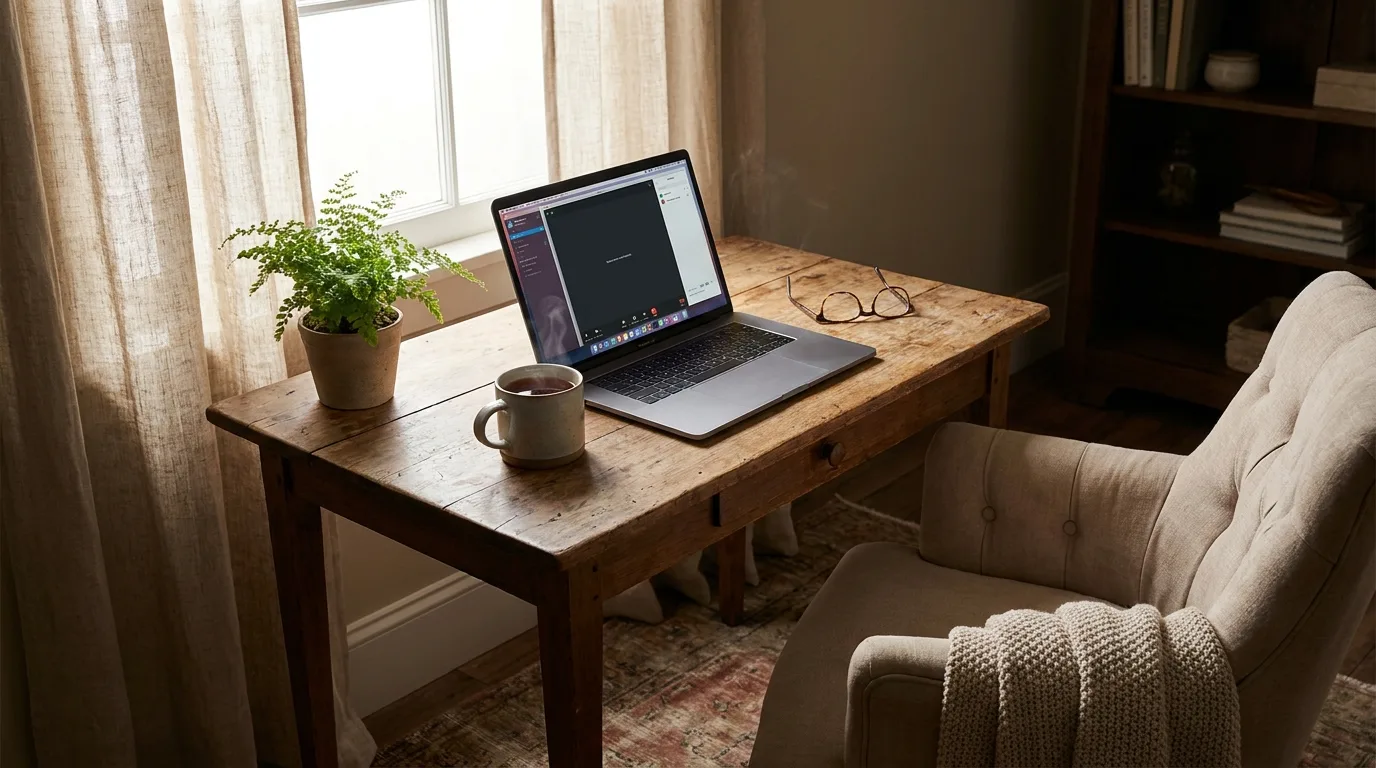
Online counselling BC clients outside major centres sometimes face extra practical hurdles. A little planning goes a long way.
Internet and connection
- If your connection is patchy, sit close to your router or use a wired connection.
- Ask others in the home to pause large downloads or streaming during your session.
- Turning off video for a moment can steady a weak connection.
- Agree with your counsellor on a backup, such as a phone call, in case video fails.
Time zones
Most of British Columbia runs on Pacific Time, but some communities in the eastern part of the province keep Mountain Time. Double-check the time on your booking confirmation so you log on at the right moment.
Privacy in shared or small homes
- Choose a time when the house is quiet, or take the session in your parked vehicle.
- Headphones keep the counsellor’s side of the conversation private.
- At a work camp, ask whether there is a private room you can use.
Letting a session settle
Without a drive home, it helps to create your own transition. Step outside, look at the trees or the water, make a cup of tea. Few places offer better spots to let a session settle than rural British Columbia.
Inside a Typical Online Session
If you have never done counselling by video, it can help to picture how a session usually unfolds. Every counsellor works a little differently, but the general shape is familiar.
- Arriving. You click your link a minute or two early, settle into your seat and make sure you can hear each other clearly.
- Checking in. Your counsellor asks how you are arriving today and what feels most important to talk about.
- The heart of the work. Depending on your goals, this might mean talking through a situation, practising a grounding skill, processing a memory or exploring a pattern.
- Closing gently. Toward the end, your counsellor helps you slow down, notice what shifted and feel settled enough to return to your day.
- Looking ahead. You confirm your next appointment and, if it fits, a small thing to try before then.
Some sessions feel light and practical, others go deep. Both are normal, and you stay in charge of what you share and when.
Choosing a Counsellor From Anywhere in British Columbia
When you can choose from a whole team instead of whoever is closest, it helps to know what to look for.
Credentials
Counsellors in the province often hold the Registered Clinical Counsellor (RCC) designation through the BC Association of Clinical Counsellors, or the Canadian Certified Counsellor (CCC) designation. Some of our team are intern counsellors working under clinical supervision. Each team bio describes that person’s training.
Approach
- EMDR for trauma and distressing memories
- Internal Family Systems for inner conflict and self-criticism
- Emotion-Focused Therapy for emotions and relationship cycles
- CBT for practical tools when thoughts loop or spiral
Our overview of types of therapy explains each approach in more depth.
Fit and feel
Pay attention to how you feel in the free consult. Do you feel heard? Is the pace comfortable? Could you imagine telling this person something hard? These signals matter as much as any credential.
Fees, Benefits and Lower-Cost Options

Fees depend on the service and the counsellor, and current rates appear when you book or on our contact page. A few pointers for planning:
- Many extended health plans reimburse counselling by registered counsellors. Your plan may list the designations it accepts, so check before your first session.
- Our low-cost counselling option pairs you with supervised intern counsellors at a reduced rate.
- Online sessions remove travel costs such as fuel, parking and ferry fares, which add up over months of therapy.
- If cost is a worry, mention it in your consult so we can talk through options openly.
Your Health Authority and Other BC Supports
Counselling works best as part of a wider web of support. Public health care in British Columbia is delivered regionally through five health authorities: Fraser Health, Interior Health, Island Health, Northern Health and Vancouver Coastal Health. Each offers mental health and substance use services, and your family doctor or nurse practitioner can help you connect with them.
- HealthLink BC: Call 8-1-1 or visit HealthLink BC for health information and navigation.
- Mental health support line: Call 310-6789, no area code needed.
- Suicide crisis support: Call or text 988 any time, or call 1-800-SUICIDE (1-800-784-2433) in BC.
- Information and self-help: HeretoHelp shares BC-focused mental health and substance use resources.
Online counselling is not an emergency service. If you are in crisis, call or text 988, or call 911 in an emergency.
Encouraging Someone You Love to Try Counselling
Many people first read about online counselling BC options on behalf of someone else: an adult child in the Kootenays, a parent in the Okanagan, a partner working away. It is hard to watch someone struggle from a distance, and gentle approaches tend to land better than pressure.
- Lead with care, not a fix. Say what you have noticed and that you are worried, without diagnosing or lecturing.
- Lower the barriers. Mention that video sessions mean no drive, no waiting room and no one in town seeing them walk in.
- Offer practical help. Help them find a quiet space, test their technology or look through team profiles together.
- Respect their pace. Adults get to choose. Leave the door open and check back later.
- Look after yourself too. Supporting someone from afar is draining, and counselling can help you as well.
If you believe someone is in immediate danger, call 911. For suicide crisis support anywhere in British Columbia or the rest of Canada, call or text 988.
Online Counselling BC FAQ
What do I need for a video session?
A device with a camera and microphone, a reasonably stable internet connection and a private place to talk. Headphones help.
Can I switch between online and in-person sessions?
Yes. When you are in Vancouver, you can book a session in our Granville Street rooms if your counsellor offers in-person times.
Will my extended health plan cover video sessions?
Plans often cover counselling by registered counsellors whether it happens by video or in person, but details vary. Check with your provider about designations and yearly limits.
What if my connection drops during a session?
Rejoin using the same link. It helps to agree with your counsellor at the start on a backup, such as a phone call.
Is this private if I live in a small community?
Your counsellor keeps what you share confidential within professional and legal limits, which they explain at the start. Because your counsellor is not part of your local community, many people find this feels more private.
Can I join from my phone?
Yes. A phone works well, ideally propped up so your hands are free. A laptop or tablet gives you a larger view if you have one.
Can I choose my own counsellor?
Yes. Browse our team and book directly, or ask us to match you based on what you share.
Take the First Step With Online Counselling BC Wide
Wherever you are in British Columbia, support can begin with one short conversation. Book a free 15 minute consult and we will help you find a counsellor who fits, or call us at 604-227-0297. You can also read about our online therapists before you decide.
Frequently Asked Questions
Can I see a Thrive therapist from outside Vancouver?
Yes. Our online sessions are available to clients across British Columbia, including smaller and rural communities.
Are your therapists able to work with clients across BC?
Yes. Our counsellors provide online sessions to clients throughout the province, with flexible scheduling.
Ready When You Are
Book a free consult and we will help you find the right therapist, in person at 470 Granville Street or online.