
Meet Our Online Therapists
These are the counsellors on our team who work with clients online. Every one of them offers secure video sessions, and many have availability this week. Read through, see who resonates, and book directly with the person who feels like the right fit.
Why People Come to Us
Choosing a therapist online can feel like guesswork, so we try to make it simple and human. Each of our online counsellors brings a distinct style, a set of specialties, and a personality that will suit some people more than others, and that is exactly as it should be. Some work gently and slowly, some are direct and practical, some specialize in trauma and EMDR, others in relationships, neurodiversity, or identity. Browse the profiles, notice who you feel drawn to, and start there.
If you would rather not choose alone, tell us a little about what you are looking for and we will match you with the therapist we think fits best. Online sessions run over secure video, so you can meet from home anywhere in British Columbia, with daytime and evening times available.
Get Started
Call 604-227-0297 or book a free consult and we will match you with a therapist who fits.
What Our Online Therapists Work With
Anxiety and depression, burnout and work stress, trauma and EMDR, couples and relationships, ADHD and neurodiversity, LGBTQ identity and affirming care, grief and life transitions, and addictions and recovery.
How to Choose
Read the bios on our team page and look for the counsellors who list online availability. Notice tone as much as credentials, because the relationship itself is the strongest predictor of good outcomes in therapy. Then book a free consult, which is a no pressure conversation to see whether the fit feels right before you commit.
Related Pages
Browse Our Team. Online Counselling across British Columbia. Online Counselling in Vancouver.
Online Therapists at Thrive: A Practical Guide to Finding Your Fit
Working with online therapists gives you skilled, personal support without the commute, the waiting room, or the rush across town after a long day. This guide walks through how online therapy works at Thrive Downtown Counselling Centre, what to look for in a counsellor, how to set up your space, and what the first few sessions tend to feel like, so you can choose with more confidence and less guesswork.
On this page
Our team has supported people since 2013, both in our rooms at 470 Granville Street and over secure video. Meeting online is not a lesser version of counselling. It is the same relationship, the same training and the same care, delivered through a screen so it fits the life you actually have.

How Online Therapy Works at Thrive, Step by Step
If you have never tried online therapy, the logistics can feel like a bigger hurdle than the conversation itself. Here is what the process looks like from your first click to a regular rhythm of sessions.
- Book a free 15 minute consult. It is a short, no-obligation call where you can describe what is going on and ask questions about how we work.
- Get matched or choose for yourself. You can ask us to recommend a counsellor through our contact form, or browse our team and pick someone whose profile resonates.
- Receive your secure link. Sessions run on Zoom, so you can join from a computer, tablet or phone without special equipment.
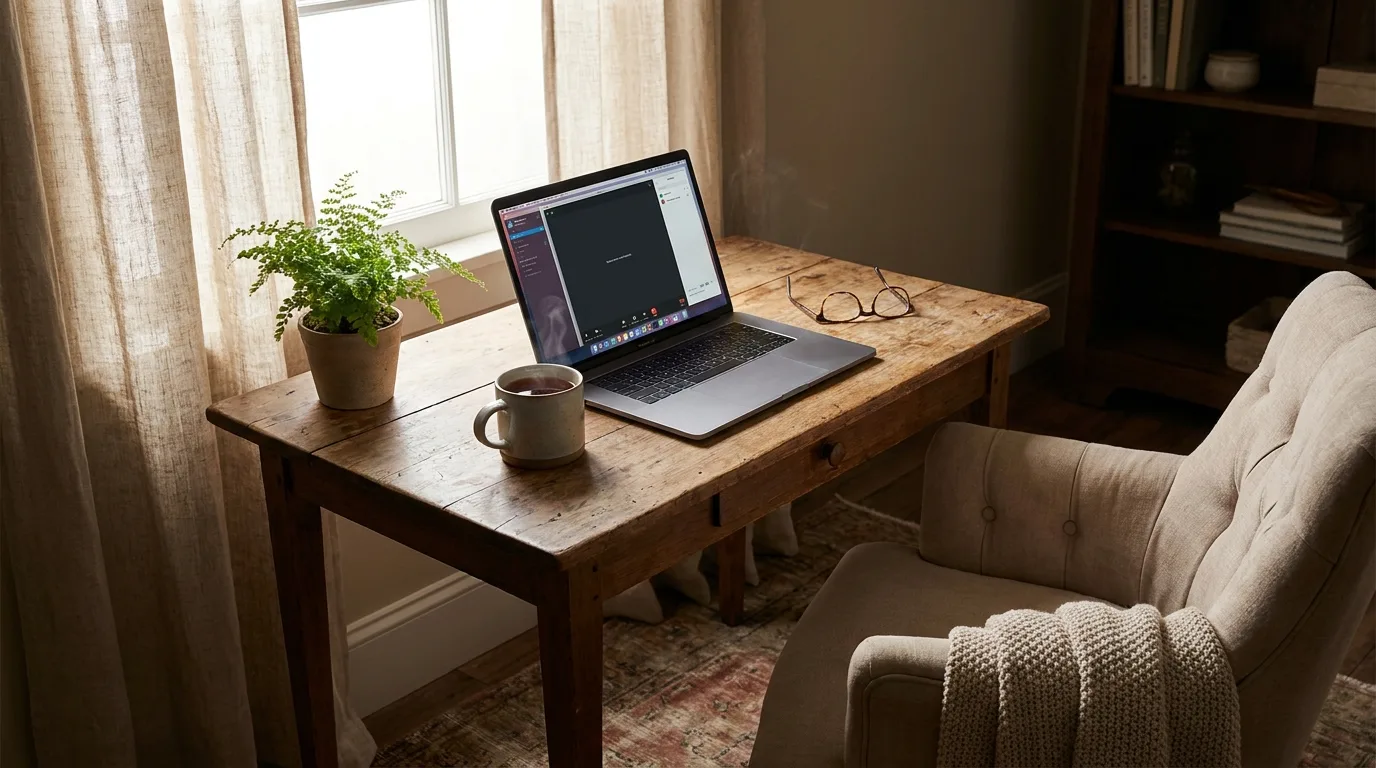
- Meet from a private space. Join from home, a closed office or a parked car, anywhere you can speak freely.
- Shape a plan together. After the first session or two, you and your counsellor agree on goals, pacing and how often to meet.
Many clients mix formats. You might begin online, then come downtown when you want the feel of a dedicated room, or shift to video when a busy season arrives. Where your counsellor offers both, you can move between them without starting over.
Choosing Between Online Therapists: What Matters Most
Because the connection between you and your counsellor carries so much weight, your own gut sense during a consult is useful information. Alongside that, a few practical factors help narrow the field when you are comparing online therapists.
Training and professional designations
In British Columbia, many counsellors hold a professional designation. You may see Registered Clinical Counsellor (RCC), granted through the BC Association of Clinical Counsellors, or Canadian Certified Counsellor (CCC), granted through the Canadian Counselling and Psychotherapy Association. Some of our team members are intern counsellors working under clinical supervision. Read each bio to see the training that person lists.
How they like to work
Ask yourself what you want from the room, even when the room is a screen. Do you want someone who mostly listens and reflects, someone who offers tools and practice between sessions, or a blend? Neither is better. The right match depends on where you are right now.
Experience with your concern
Look for a counsellor who regularly supports people with what brings you in. If your focus is attention and executive function, our ADHD counselling team may be a good place to start. If it is a relationship, look for couples experience. A counsellor who knows the territory can explain their thinking clearly and spot patterns sooner.
Practical details that make therapy sustainable
- Session times that realistically fit your week
- Whether they see clients both online and in person, if you may want both
- Whether their designation is covered by your extended health plan
- Whether you want individual work, couples work, or both over time
Questions to bring to your free consult
- How do you usually work with someone facing what I am facing?
- What does a typical online session with you look like?
- How will we notice whether therapy is helping?
- What happens if the video connection drops partway through?
- Could I switch to in-person sessions later if I want to?
Approaches Our Online Therapists Use Over Video
Most evidence-based approaches translate well to video with a few thoughtful adjustments. Here is how several methods used by online therapists at Thrive tend to work through a screen.
EMDR therapy
EMDR (Eye Movement Desensitization and Reprocessing) pairs bilateral stimulation, such as following movement with your eyes or gentle tapping, with focused attention on a difficult memory. Online, counsellors commonly use on-screen visual tracking or self-tapping. Time is spent first on stabilization and resourcing, so you have ways to settle if things feel intense. Read more on our EMDR therapy page.
Internal Family Systems (IFS)
IFS explores the different parts of you, such as a harsh inner critic or a protective part that keeps you busy, with curiosity instead of judgment. Because it relies mostly on inner attention and conversation, many people find it flows naturally online, sometimes with eyes closed in the comfort of their own space.
Emotion-Focused Therapy (EFT)
EFT helps you notice, name and make sense of emotions rather than push them away. In couples work, it focuses on the cycles of reaching and withdrawing that keep partners stuck. Couples usually join together from one quiet room.
Cognitive Behavioural Therapy (CBT)
CBT works with the links between thoughts, feelings and actions. Simple worksheets, thought records or a shared plan can be reviewed together in real time, which suits the online format well.
Regulation and body awareness
Much of the Regulate stage of the Thrive Formula involves noticing breath, posture and body cues. Practising these skills from your own couch means you are learning them in the very place you will need them later.
Setting Up Your Space for Online Therapy
A little preparation helps an online session feel like a protected hour rather than one more video call.
Privacy
- Choose a room with a door, and let others at home know you need uninterrupted time.
- Wear headphones so your counsellor’s voice stays private.
- A fan or white noise outside the door can help mask your voice.
- If home is not private, a parked car or a bookable room at work can do the job.
Technology
- Test your camera, microphone and connection a few minutes early.
- Plug in your device so the battery does not fade mid-session.
- Close other apps and silence notifications.
- Agree with your counsellor on a backup plan, such as a phone call, if the video drops.
Transitions before and after
One thing people miss with online therapy is the walk or bus ride that separates a session from the rest of the day. Build in a small buffer: a glass of water, a few slow breaths, a stroll around the block afterward. These moments give your nervous system time to shift gears.
Is Online Therapy the Right Fit for You?
Video sessions suit many people and many concerns, and it is worth thinking it through honestly before you decide.
It often works well if you
- have a demanding schedule or a long commute
- live outside downtown Vancouver or elsewhere in British Columbia
- find it easier to open up from a familiar space
- are a parent, caregiver or shift worker with narrow windows of time
- live with chronic illness, disability or social anxiety that makes travel draining
- want to stay consistent through a busy season or a stretch of stormy weather
In-person sessions may suit you better if
- you have no private space at home or nearby
- screens leave you drained or distracted
- you want a clear physical boundary between therapy and daily life
- your counsellor suggests meeting in the room for a particular phase of work

If meeting face to face sounds better, our rooms at 470 Granville Street are steps from Granville SkyTrain Station. Our in-person counselling page has the details.
Video counselling is not designed for emergencies. If you are in crisis, call or text 988, or call 911 in an emergency. More information is available at 988.ca.
What to Expect in Your First Sessions
Your first session is mostly about getting to know each other. Your counsellor will ask what brings you in, what you hope might change and a little about your history, and you are welcome to ask anything about how they work.
The Thrive Formula in practice
- Regulate: Early work often helps your nervous system settle, so you can step out of fight, flight or collapse and feel more resourced.
- Reveal: With more safety in place, you explore how you adapted to stress and hard experiences, using approaches such as EMDR, IFS, EFT or CBT.
- Reclaim: Insight becomes practical change: clearer needs, firmer boundaries and choices that come from who you are.
These stages are not a rigid sequence. Many people move back and forth between them, and your counsellor adjusts the pace to you. Underneath it all is a simple belief: you make sense, you are not broken, and connection heals.
Being an active partner
Therapy tends to go best when you feel free to say what is helping and what is not. Good online therapists welcome that feedback and use it to adjust, whether that means slowing down, trying a different approach or changing how often you meet.
Getting the Most From Sessions With Online Therapists

People who get the most from online therapists tend to treat the hour with the same respect they would give an appointment across town. A few small habits can make a real difference over weeks and months.
- Protect the time. Close email, put your phone on silent and resist the urge to multitask. Your attention is part of the work.
- Arrive with a thread. Jot down one or two things you want to talk about, even if the session ends up going somewhere else.
- Notice what lingers. After a session, pay attention to the feelings, memories or ideas that stay with you, and bring them back next time.
- Practise one small thing. A breathing skill, a boundary you want to try, a conversation you plan to have. Small experiments add up.
- Keep a steady rhythm. Consistency often matters more than intensity, especially early on.
- Share life updates. Let your counsellor know about changes in health, work, relationships or medication, since these can shape the work.
Progress in online therapy is rarely a straight line. Some weeks feel like breakthroughs and others feel quiet. Both are part of the process, and your counsellor can help you make sense of the ups and downs.
Costs, Insurance and Low-Cost Options
Fees vary by service and by counsellor. Current rates are shown when you book or on our contact page. A few points can help you plan ahead:
- Extended health benefits: Many extended health plans reimburse counselling by registered counsellors. Check which designations your plan covers and your yearly limit.
- Keep your receipts: Most plans ask you to submit receipts to claim reimbursement.
- Low-cost counselling: Supervised intern counsellors offer a more affordable path. See our low-cost counselling page.
- Ask during the consult: If cost is a concern, say so early. It helps us point you toward options that fit.
Online Therapists FAQ
Is online therapy as effective as meeting in person?
Research suggests video counselling can be as helpful as in-person sessions for many common concerns, including anxiety and depression. Your comfort with the format and your connection with your counsellor tend to matter most.
Do I need special software or equipment?
No. Sessions run through Zoom on a computer, tablet or phone with a camera. You receive a secure link before your appointment.
Can couples work with online therapists?
Yes. Couples can meet together from one private room. Learn more about couples counselling at Thrive.
What if I live outside Vancouver?
Our video sessions serve people across British Columbia. Visit our online counselling BC page to learn more.
Can I switch counsellors if the fit is not right?
Yes. Changing counsellors is a normal part of finding the right support. Let us know and we will help you find someone else on the team.
How is my privacy protected?
Counsellors follow professional confidentiality standards, with a few legal limits your counsellor explains at the start. Headphones and a private room protect your side of the conversation.
Book a Free Consult With Our Online Therapists
You do not need to have everything figured out before reaching out. Book a free 15 minute consult, tell us what you are looking for, and we will help you find a counsellor who fits, online or in person. You can also call 604-227-0297, or browse our team to choose one of our online therapists yourself.
Frequently Asked Questions
How do I book an online session with a specific therapist?
Browse our team, choose a counsellor who offers online sessions, and book a free consult with them directly. If you would prefer we choose, submit the matching form and we will recommend the best fit.
Do your online therapists have availability soon?
Yes. Several of our online counsellors currently have openings, often within the same week, including evening times.
Ready When You Are
Book a free consult and we will help you find the right therapist, in person at 470 Granville Street or online.