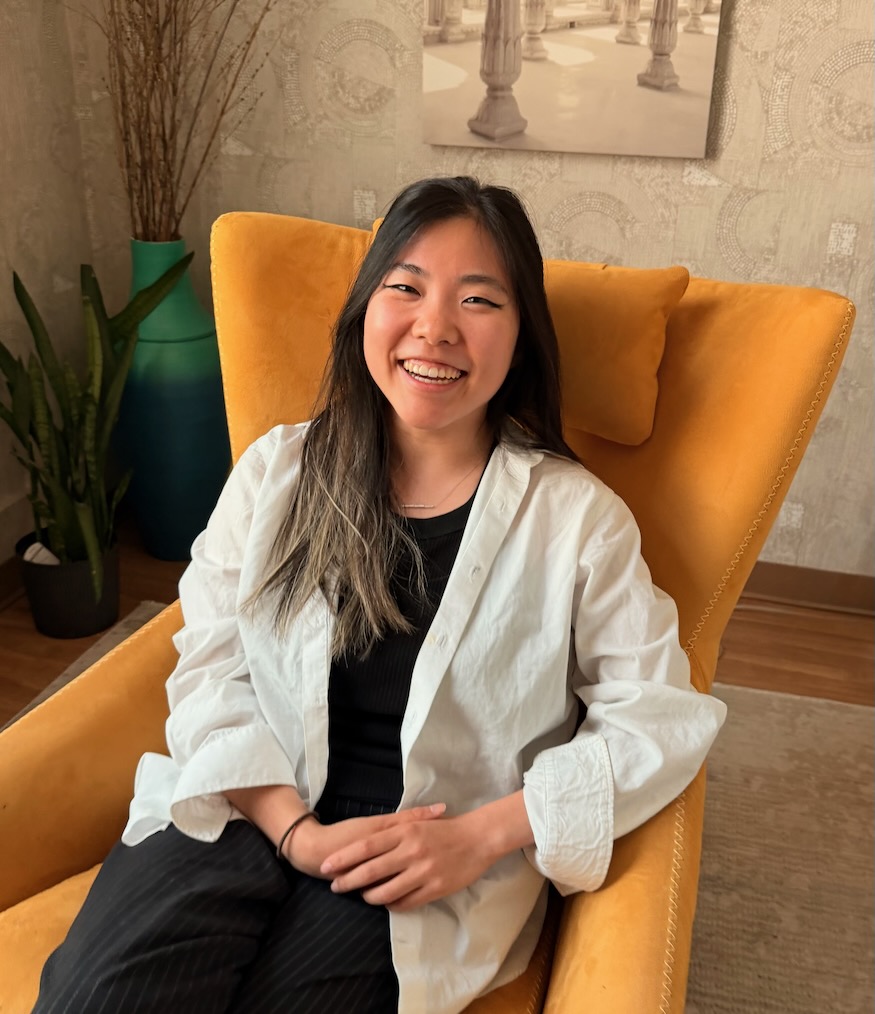
Diana Lim
Intern Counsellor
No mud, no lotus.
, Thích Nhất Hạnh


Specialties of Interest
- Grief, Loss & Life Transitions
- Burnout & Nervous System Overwhelm
- Depression & Anxiety
- Relationship Patterns
- Mindfulness & Mind-Body Connection
- Women's Emotional Healing & Embodied Connection
- High Pressure Careers, Leadership and Performance Stress
Approaches
- Mindfulness-Based
- Trauma & Grief Informed
- Person-Centered
If you feel tired from always striving, holding it all together, or carrying more than others can see, I understand. This world is already a lot , and yet anxiety, stress and burnout are always happy to add even more weight. Perhaps on top of that you are facing life transitions, relationship challenges, or self-criticism as you long to feel more connected to yourself.
I have known what it’s like to navigate grief, loss and transition alongside demanding environments, searching for steadiness while holding both ambition and pain. My approach means sharing what I have learned myself:
Healing is not about becoming someone new, but about reconnecting with the parts of ourselves that have been overworked, protected, silenced, or left behind.
In my work, I offer mindfulness-based counselling as a steady place to return to, supporting the healing of symptoms that arise when life feels overwhelming.
Together, we slow down, turn inward, and gently explore what may be asking for care and attention. We work with both the emotional and embodied layers of your experience: the thoughts you carry, the patterns you repeat, and the ways your body may be holding stress, fear, or tension.
I aim to create a space that feels steady, reflective, and deeply human, where insight and practical change can unfold side by side. From there, we can begin reconnecting with your inner wisdom, building a more compassionate relationship with yourself, and moving through life with greater clarity, resilience, and ease.
Diana Lim: Mindful, Low-Cost Counselling in Downtown Vancouver
Diana Lim is an intern counsellor at Thrive Downtown who offers mindfulness-based, person-centred counselling for people who are tired of holding everything together. If Diana’s words above feel close to home, this guide explains the ideas that shape the work, the experiences Diana is especially interested in supporting, and how low-cost sessions with an intern counsellor work at Thrive.
On this page
“No Mud, No Lotus”: The Philosophy Behind Diana Lim’s Counselling
The quote on this page comes from Thích Nhất Hạnh, the Vietnamese Zen teacher who helped bring mindfulness to people around the world. The lotus grows out of mud. In his teaching, suffering is not something to be ashamed of or rushed past. Handled with care and attention, it can become the ground that something new grows from.
That idea sits comfortably beside Diana’s own description of healing: not becoming someone new, but reconnecting with the parts of yourself that have been overworked, protected, silenced or left behind. Counselling with Diana does not ask you to pretend the mud is not there. It offers a steady place to be with it until it starts to shift.
What this philosophy can mean in practice
- Painful feelings are treated as meaningful signals, not as proof that something is wrong with you.
- Progress is measured by how you relate to difficulty, not only by whether difficulty disappears.
- Rest, reflection and gentleness are seen as part of the work, not distractions from it.
- Your inner wisdom is taken seriously, and sessions make room to hear it.
Mindfulness-Based Counselling with Diana Lim
Mindfulness is often described as paying attention, on purpose, to the present moment without harsh judgment. In counselling, it becomes a way to notice thoughts, emotions and body sensations with curiosity instead of getting swept away by them. Research suggests that mindfulness-based approaches can help many people manage stress and anxiety, and one structured program, mindfulness-based cognitive therapy, has been studied for reducing the risk of depression returning.
What mindfulness can look like in a session
- Pausing to notice where a feeling shows up in your body before you try to explain it
- Naming thoughts as thoughts, such as “there is the story that I am falling behind”
- Slowing your breathing or feeling your feet on the ground when a topic becomes intense
- Getting curious about an urge, like checking email or apologizing, instead of acting on it automatically
- Ending a session with a short practice you can take into your week
Common myths about mindfulness
- “I have to empty my mind.” A busy mind is normal. The practice is noticing, not silencing.
- “It is just relaxation.” Mindfulness can be calming, but its deeper aim is awareness and choice.
- “I need meditation experience.” No experience is needed. Practices can be as brief as a few breaths.
- “It means accepting everything as it is forever.” Awareness often makes change easier, because you can see what is actually happening.
A two minute practice to try now
Sit comfortably and let your eyes rest on one spot. Notice three things you can see, two things you can hear and one place where your body touches the chair or floor. Then take one slow breath with a longer exhale. That is it. Small practices like this, repeated often, are the kind of foundation mindfulness-based counselling builds on.
Person-Centred Support: You Are the Expert on Your Life
Alongside mindfulness, Diana Lim lists a person-centred approach. Rooted in the work of psychologist Carl Rogers, person-centred counselling rests on a simple but powerful belief: when people feel deeply heard and accepted, they tend to find their own way forward. The counsellor is not there to diagnose your life or hand you a script. Diana’s role is to listen closely, reflect back what Diana hears, and help you sort through what matters most.
- You set the direction of each session, even if that direction is “I do not know where to start.”
- Feelings are welcomed as they are, without being hurried toward a solution.
- Reflections help you hear your own thoughts more clearly, which often reveals options you could not see before.
- Advice, when it comes, is offered as something to consider rather than a rule to follow.
For people who spend their days performing, leading or caring for others, simply being listened to without an agenda can feel unfamiliar at first, and quietly restorative over time.
Depression and Anxiety: Gentle Ways Forward
Depression and anxiety are listed among Diana’s specialties of interest, and they often travel together. Depression can feel like heaviness, flatness or a loss of meaning. Anxiety can feel like a mind that will not stop scanning for what might go wrong. Both can make everyday tasks feel much harder than they look.
- Noticing thought patterns such as harsh self-talk or worst-case predictions, and loosening their grip
- Building small, doable routines that support sleep, movement and connection
- Using grounding and breath practices when worry spikes
- Exploring what feelings might be asking for, rather than only trying to make them go away
Counselling works well alongside other care. If you are also seeing a doctor about your mood, Diana can be one part of a wider circle of support.
The Mind-Body Connection: When Stress Lives in the Body
Diana describes working with both the emotional and embodied layers of your experience, including the ways your body may be holding stress, fear or tension. Many people notice this long before they have words for it: a clenched jaw, shallow breathing, a stomach that knots before meetings, or a fatigue that sleep does not fix.
Burnout and nervous system overwhelm
The World Health Organization describes burnout as an occupational phenomenon marked by exhaustion, growing mental distance or cynicism about work, and a reduced sense of effectiveness. Burnout can also build from caregiving, study or years of simply holding too much. Common signs include:
- Waking up tired no matter how much you sleep
- Feeling detached, irritable or numb about things you used to care about
- Getting sick more often or noticing more aches and tension
- Struggling to concentrate or make simple decisions
- Using weekends only to recover, with little room for joy
Mindfulness-based counselling can help you notice early signals of overload, create moments of real rest, and question the beliefs that keep you pushing past your limits.
Grief, Loss and Life Transitions
Diana shares having navigated grief, loss and transition while in demanding environments, and brings a trauma- and grief-informed approach to this work. Grief is not only about death. It can follow a breakup, a move, a career change, a health diagnosis, infertility, estrangement or the end of a version of life you expected to have.
What grief-informed counselling recognizes
- Grief rarely moves in neat stages. It tends to come in waves and can resurface on anniversaries or in quiet moments.
- Some losses are not openly acknowledged by others, which can make them lonelier to carry.
- Staying connected to what or who you lost can be a healthy part of grieving.
- Relief, anger and guilt can sit alongside sadness, and all of them make sense.
Counselling can offer a place where your loss does not have to be tidy or finished on anyone else’s timeline. HeretoHelp BC also shares information on coping with grief, depression and anxiety. If you are in crisis, call or text 988, or call 911 in an emergency.


High-Pressure Careers, Leadership and Performance Stress
Diana Lim lists high-pressure careers, leadership and performance stress among specialties of interest, and writes about holding both ambition and pain. People in demanding roles are often very good at looking fine. Underneath, they may be running on adrenaline, second-guessing every decision or feeling that their worth depends on the next result.
- Perfectionism: high standards that have quietly turned into constant self-criticism.
- Always-on pressure: difficulty switching off from messages, deadlines or responsibility for others.
- Performance anxiety: dread before presentations, reviews or high-stakes moments.
- Leadership loneliness: carrying decisions and team stress with few places to put it down.
Mindfulness-based counselling does not ask you to give up ambition. It helps you pursue it from steadier ground, with clearer boundaries and more compassion for yourself when things do not go to plan.
Women’s Emotional Healing and Relationship Patterns
Many women learn early to be capable, accommodating and emotionally available for everyone else. Diana’s interest in women’s emotional healing and embodied connection makes space for what has been set aside along the way: anger, grief, desire, rest and a sense of being at home in your own body.
Relationship patterns are part of this too. You might notice that you over-function, keep the peace at your own expense, or find yourself in similar dynamics again and again. Person-centred counselling explores these patterns without blame, trusting that you are the expert on your life and that clarity grows when you feel truly heard.
Embodied connection can be as simple as noticing when your shoulders rise during a conversation, or when your breath softens around someone safe. Over time, these small signals can become a trusted guide for choosing relationships, boundaries and commitments that feel right, instead of ones that only look right from the outside.
Low-Cost Counselling with Diana Lim at Thrive
As an intern counsellor, Diana is part of Thrive’s low-cost counselling option, where intern counsellors see clients under clinical supervision. For many people, this makes regular counselling more accessible while still offering thoughtful, caring support.
- Start with a free 15 minute consult. Book online and request Diana, or let Thrive match you based on what you share.
- Meet for a first session. You talk about what is weighing on you and what you would like to feel more of, whether that is calm, clarity or connection.
- Shape a plan together. Diana and you decide how to blend mindfulness practices, grief-informed support and reflective conversation.
- Continue in a way that fits. Thrive offers sessions in person at 470 Granville St., near Granville SkyTrain Station, and online by secure video. Ask during your consult which options Diana currently offers.
What supervision means for you
In supervised practice, an intern counsellor reviews their work with an experienced clinical supervisor. This is a standard part of counselling training and is designed to support the quality of your care. You are welcome to ask Diana how supervision works and how your privacy is protected, so you can start sessions feeling informed.
Preparing for your first session
- Jot down a few words about what feels heaviest right now, even if it seems small.
- Notice when stress shows up most: mornings, workdays, evenings or around certain people.
- Think about what “better” might look like in a few months, without needing a perfect answer.
- Bring any questions about fees, scheduling or how mindfulness is used in sessions.
The Thrive Formula and mindfulness
- Regulate: using breath, grounding and present-moment awareness to settle an overwhelmed system.
- Reveal: noticing the patterns, beliefs and body responses that formed under stress or loss.
- Reclaim: moving through life with greater clarity, resilience and ease, as Diana puts it.
Current rates are shown when you book or on the contact page. Insurance coverage for sessions with intern counsellors varies, so check with your extended health plan. You can also meet the rest of the Thrive team.
Diana Lim FAQ
What is an intern counsellor?
An intern counsellor is completing the supervised practice part of their counselling training. At Thrive, interns see clients under clinical supervision, which is also what makes the low-cost option possible.
Do I need meditation experience to work with Diana Lim?
No. Mindfulness practices are introduced gently and can be very short. You can go at your own pace and skip anything that does not feel right.
Can mindfulness help with grief?
Many people find that mindfulness helps them stay with waves of grief without being overwhelmed. It does not rush grief along, but it can make it feel less frightening to carry.
Is the counselling trauma-informed?
Yes. Diana lists a trauma- and grief-informed approach, which means safety, choice and pacing come first, and you never have to share more than you want to.
Will my extended health plan cover intern sessions?
It depends on your plan. Some plans only reimburse registered counsellors, so it is worth checking before you begin.
Can I come in if nothing is technically wrong?
Yes. Many people seek counselling because they feel stretched thin, stuck or disconnected, not because of a crisis. Wanting more steadiness and ease is reason enough to reach out.
How often would we meet?
That is something you and Diana decide together, based on your goals, schedule and budget. Some people prefer weekly sessions at first and space them out later, while others choose a steady rhythm throughout.
What if I am not sure Diana is the right fit?
Use the free consult to get a feel for it. If another counsellor would suit you better, Thrive can help you find one.
Begin Counselling with Diana Lim
You do not have to wait until everything falls apart to deserve support. You make sense, you are not broken, and connection heals. Book your free 15 minute consult to start with Diana Lim, or call Thrive at 604-227-0297 with any questions.